Virtual Reality World Champion
Fascinating virtual reality time travel to the 1930 FIFA World Cup.
Client
FIFA Museum Zurich @ NMY
Role
Creative Direction, UX / UI, Game Design, Animation
About the project
As Creative Director, I had the exciting challenge of leading a dedicated team to develop a pioneering location-based virtual reality experience for the FIFA Museum in Zurich. Our goal was to transport visitors back in time to experience the history of the first FIFA World Cup in 1930.
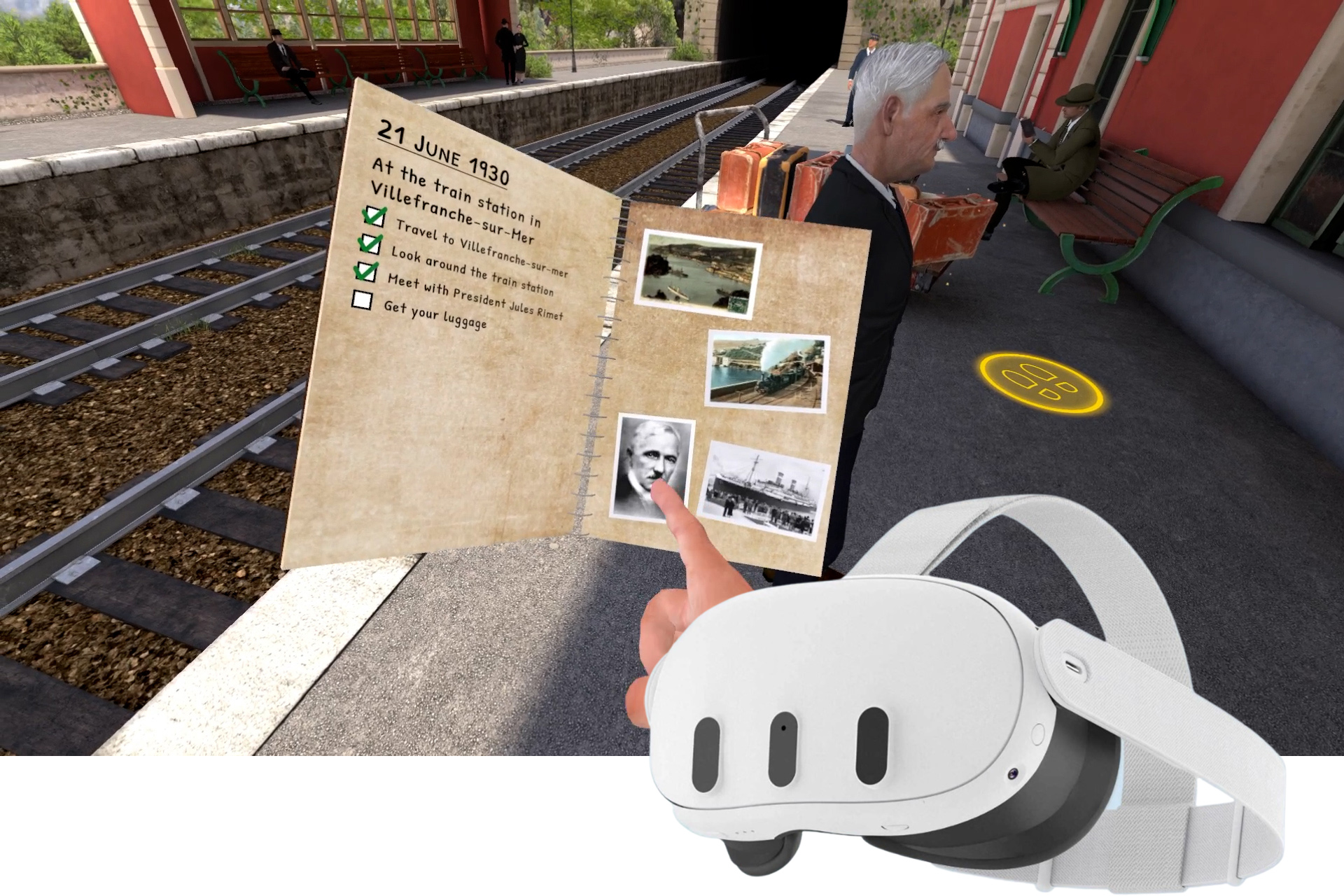
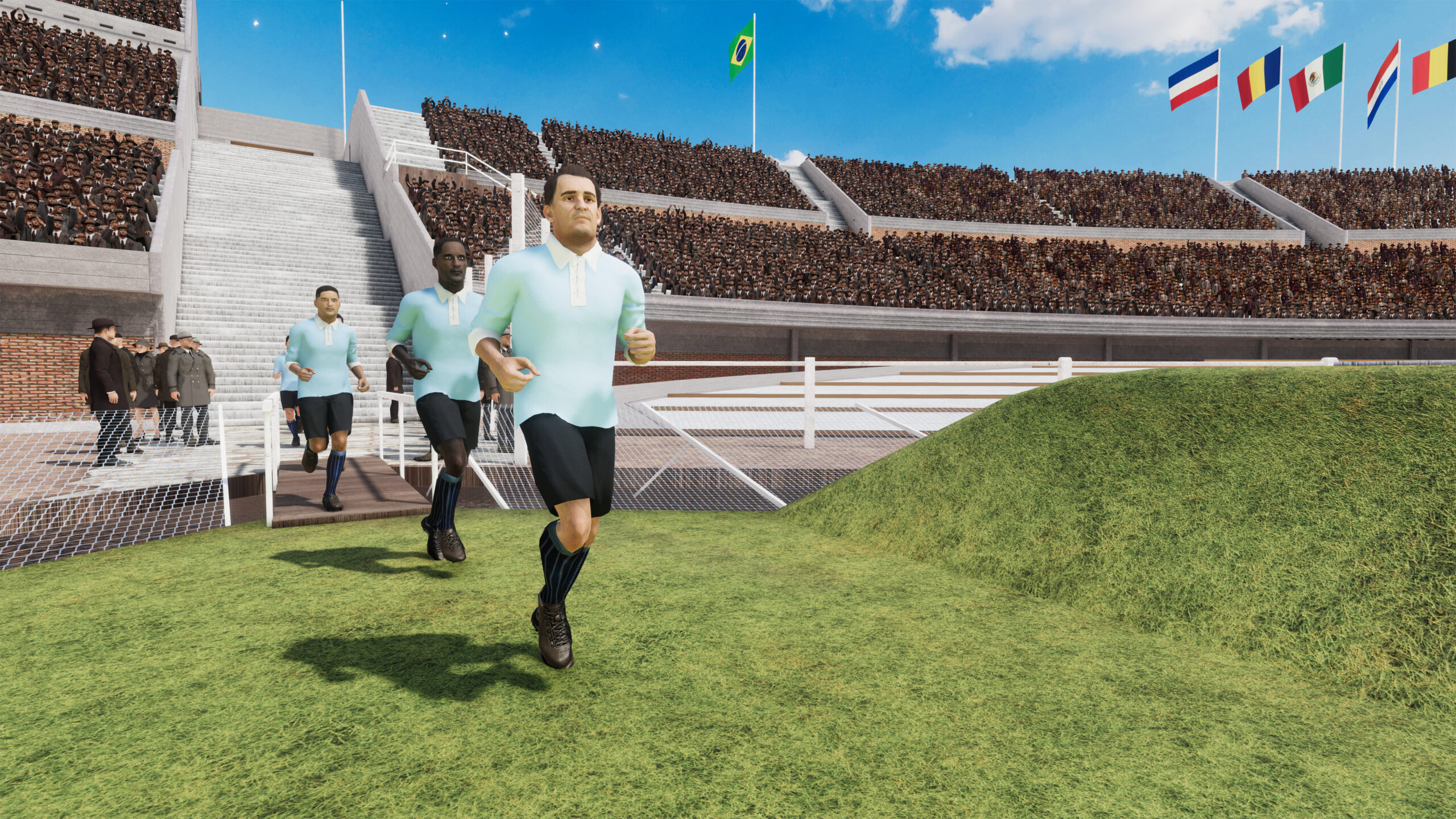
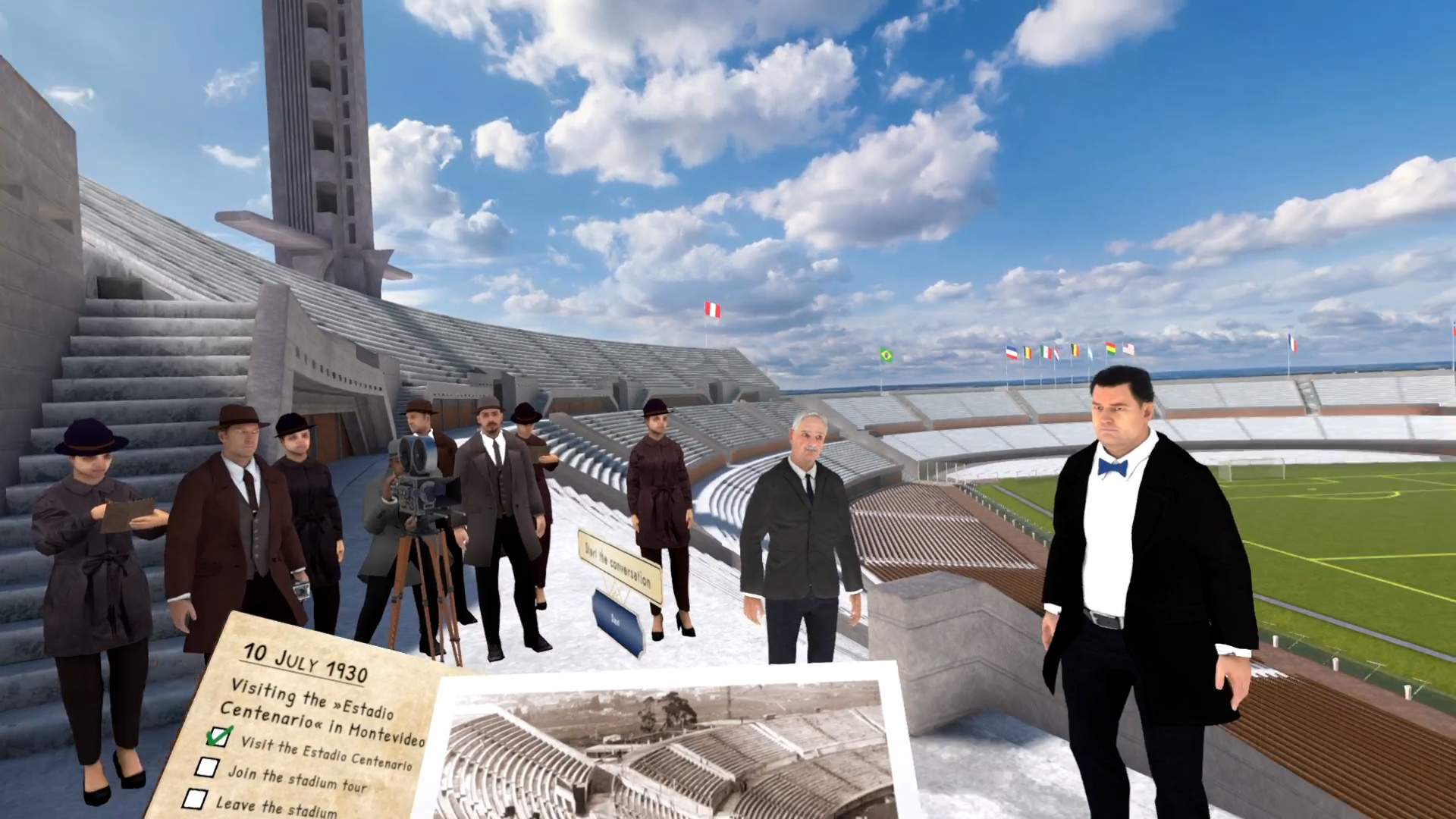
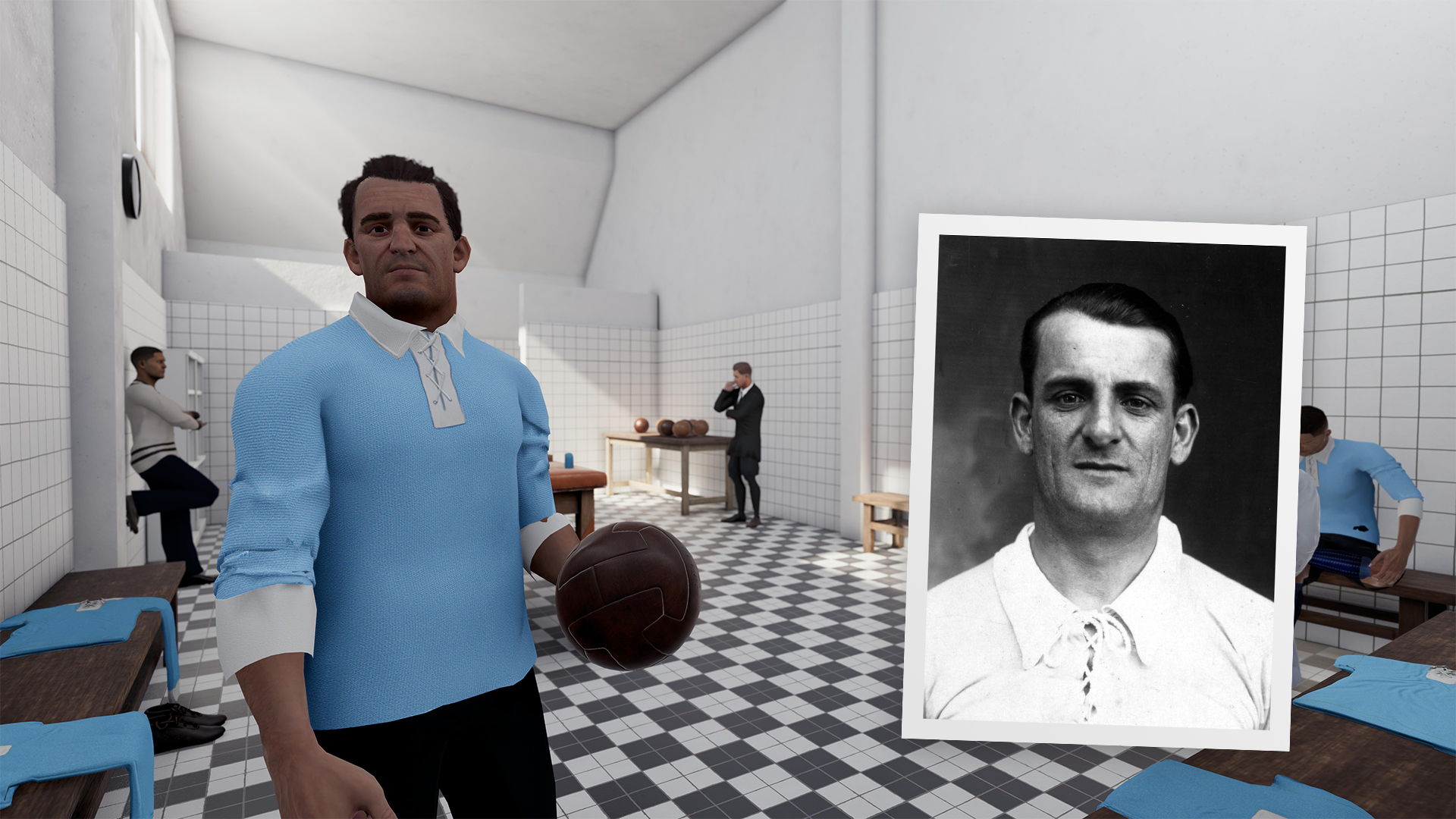
This 30-minute immersive experience takes visitors on a journey with the European teams to the 1930 World Cup. They encounter historical events, meet significant personalities of the era, and explore authentic artifacts. The VR application, presented in a special event area of the museum, can be enjoyed by up to six participants simultaneously.
The journey begins
Our creative journey began with concept development, content research, and identifying our target audience. We aimed to design an informative yet engaging application that could be easily understood by users with no prior virtual reality experience. Emphasis was placed on straightforward onboarding and intuitive interactions to ensure users could fully enjoy the experience.
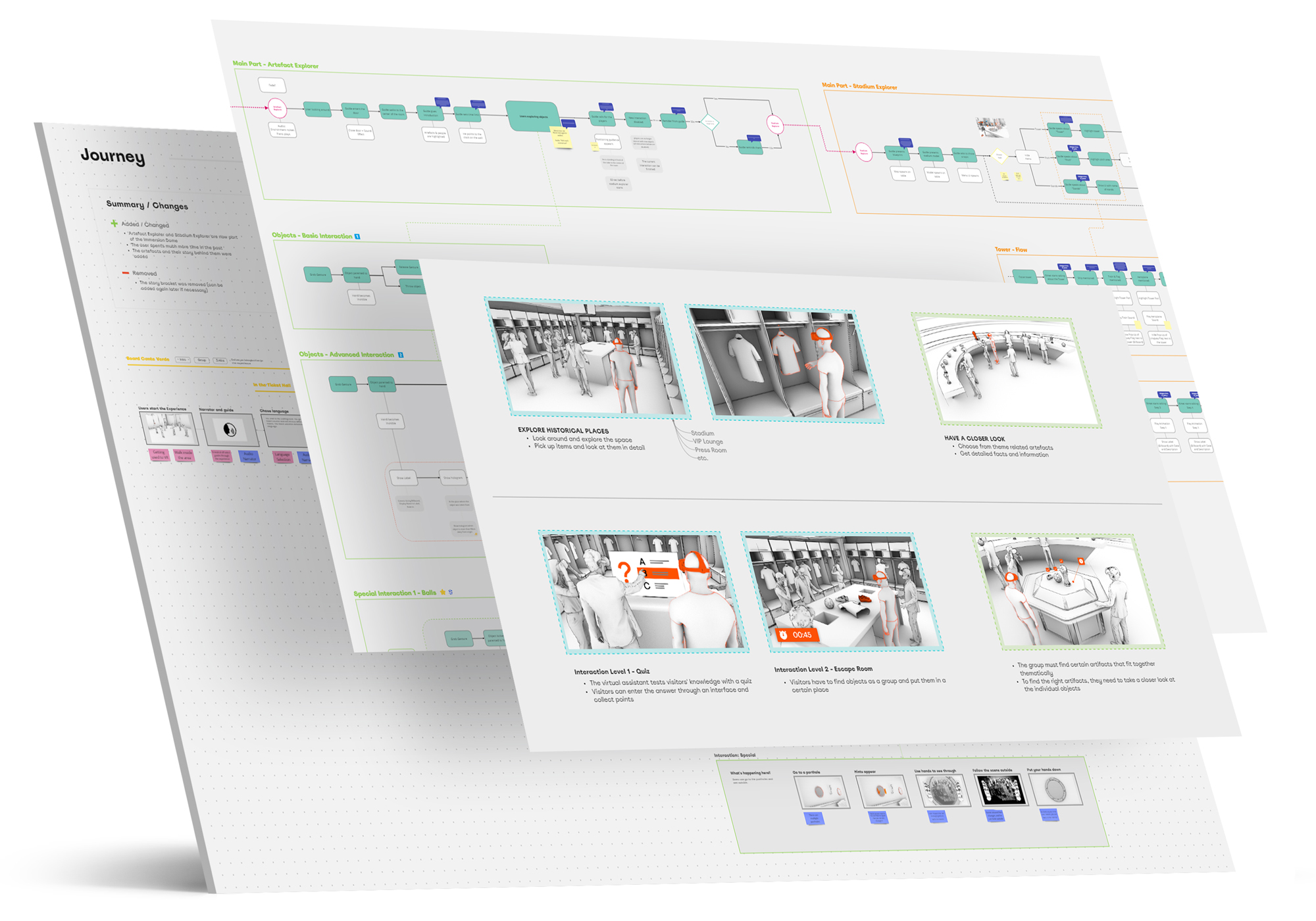
During this phase, we used user flows and storyboards to define the application’s processes. Early prototypes and user testing ensured the interactions were user-friendly and engaging.
On to the 1930 World Championship
In the second phase, the focus was on the first FIFA World Cup in 1930. Detailed research helped us identify key locations, events, and characters to tell the World Cup story.
Visitors follow the European teams’ journey to the World Cup through five different scenarios. Characters guide users through the story, alternating between passive experiences and independent exploration of the environment, where they interact with artifacts and characters.
Bringing it to life
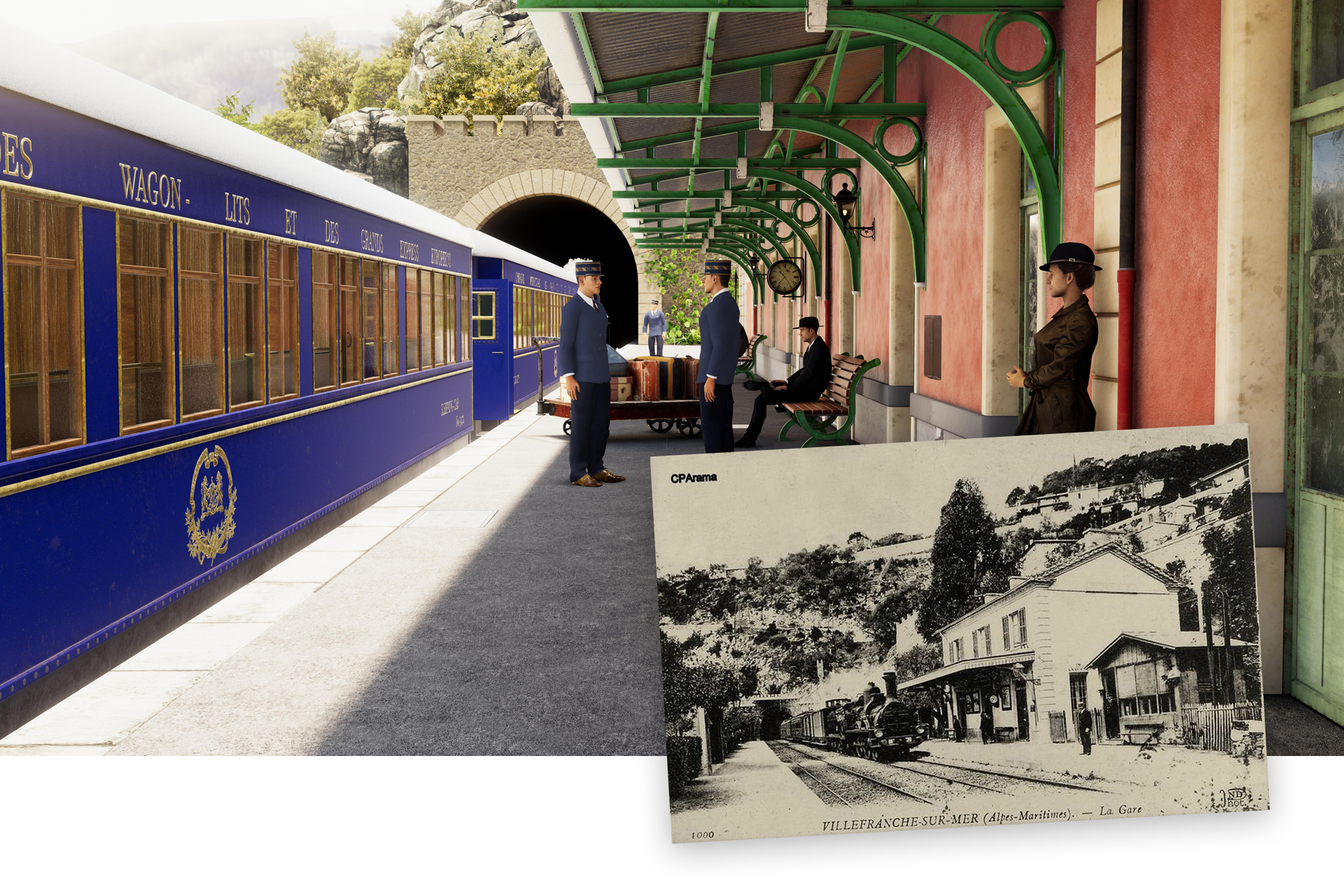
Our 3D team meticulously modeled original locations and characters, optimized for VR, considering the spatial restrictions of the museum. Motion capture animations brought the characters to life, adding a high level of detail and realism.
We also designed and tested the user interface, developing user guidance strategies to ensure the VR experience was informative, engaging, and easy to use. Extensive user testing confirmed the application’s effectiveness.
Sound design was crucial for authenticity. We created sound effects, selected voice actors with appropriate accents, and synchronized the voice recordings with the mocap animations to enhance the experience.
Expanding to Meta Quest
Following a successful museum launch, our next goal was to make the experience accessible to VR enthusiasts worldwide. We optimized the application for standalone headsets and prepared it for submission to the Meta Quest Store.
This process involved developing additional features for a seamless transition from multiplayer to single-player mode. We customized the UX design to ensure the single-player experience was smooth and entertaining.